
Review · VENICE
Venice Walking Tour and Gondola Ride
Venice makes you work for its beauty. This three-hour walking tour takes you from Santa Lucia station through St. Mark’s Square, across famous bridges, past Doge’s Palace, and onto a traditional gondola. It is a smart first look at a city that can feel confusing within minutes of leaving the train station.
I like the combination of sightseeing and a gondola ride. You get Venice on foot, where narrow lanes and quiet back streets make the city feel real, then see it from the water. I also like the small-group format and the chance to hear stories from guides such as Julian and Elisabeth, who received especially warm praise for their care and local knowledge.
The main concern is pace. Some bookings have felt like a running tour, with few pauses and too much time spent walking from the station to the gondola. The gondola ride has also been unavailable on at least one occasion, so confirm the details before setting out.
Key points to know before booking
- The tour starts at Santa Lucia station: You meet at Venice’s main railway station and walk into the historic center from there.
- The gondola is part of the experience: This is not just a photo stop. A traditional gondola ride is included, though availability and the exact sequence can vary.
- You see Venice’s essential sights: The route includes St. Mark’s Square, the Bridge of Sighs, Rialto Bridge, Doge’s Palace, La Fenice, and the Grand Canal.
- The group should be small: The included details say up to 14 people, while the additional information says a maximum of 8. Check your confirmation for the actual group size.
- Comfortable shoes matter: Venice means uneven paving, bridges, and repeated steps. You will cover plenty of ground.
- The price buys convenience, not admission: At $185.38 per person, the value depends on how much you want a guide and gondola arranged together. Major interior admissions are not included.
A useful first look at Venice
For a first visit, this route covers the Venice most people hope to see. You begin at the Santa Lucia railway station, follow the city’s lanes toward the Grand Canal, and work your way through the central districts to St. Mark’s Square and the surrounding monuments.
That starting point is practical. If you arrive by train, you do not need another transfer before meeting the guide. You also begin with a useful lesson in Venetian geography: the Grand Canal is not simply a pretty waterway. It is Venice’s main artery, a large reverse S that separates the central city into two sides.
The walk is designed to mix famous places with lesser-known lanes. That balance matters. St. Mark’s Square can feel like a grand outdoor stage, but Venice is best understood in the small passages between major sights. A guide can point out how the city works, explain the purpose of a bridge or square, and help you avoid spending the whole tour staring at a map.
The experience lasts about three hours. That sounds generous, but the route contains many stops, a substantial amount of walking, and a gondola ride. You should think of it as a fast introduction, not a slow study of every monument.
More Gondola Rides with a Walking Tour in Venice:
- Venice Walking Tour and Gondola Ride
★ 3.5 · 3,630 reviews - Venice: City Center Walking Tour & Iconic Gondola Ride
★ 4.3 · 500 reviews - Venice: Walking Tour and Shared Gondola Ride
★ 4.1 · 466 reviews
The Grand Canal gives you Venice’s basic shape

The Grand Canal is the first major sight, and it explains why Venice feels different from almost every other city. It is about 3.8 kilometers long, between 30 and 90 meters wide, and roughly 5 meters deep. The waterway runs from the lagoon near Santa Lucia station to the basin at San Marco.
I like beginning here because it gives the rest of the walk a framework. Venice was built along this natural route, so the canal functions as the city’s main street. Boats replace buses and cars, while bridges and footpaths connect the districts.
You may spend only about ten minutes at this point, so do not expect a full Grand Canal cruise. The value is orientation. Listen carefully as the guide explains the canal’s role, then watch the traffic on the water. A ferry or gondola may pass, and the busy waterway will make the city’s unusual transport system clear.
St. Mark’s Square and the Campanile
From the smaller lanes, St. Mark’s Square feels enormous. In Venice, most open spaces are called campi, or fields. This one is la Piazza, the square, and it has long served as the city’s main social, religious, and political center.
The tour allows about 30 minutes here. That is enough to take in the scale, look toward the lagoon, and hear the story behind the square’s importance. The nearby Piazzetta extends toward the water, creating a broad ceremonial space beside the Doge’s Palace.
The Campanile di San Marco rises over the square beside St. Mark’s Basilica. The basilica’s structure dates from the late 11th century, and its façade has been altered and decorated over the centuries. This is one of the places where a guide’s explanation helps. Without context, you see a striking church and bell tower. With context, you begin to understand how closely religion and government were tied in Venetian public life.
Admission to the Campanile and other major sights is not included. The itinerary lists the monument as a viewing stop rather than an interior visit. If you want to climb or enter anything, ask the company before booking so you do not assume those tickets are covered.
The Clock Tower and the Bridge of Sighs
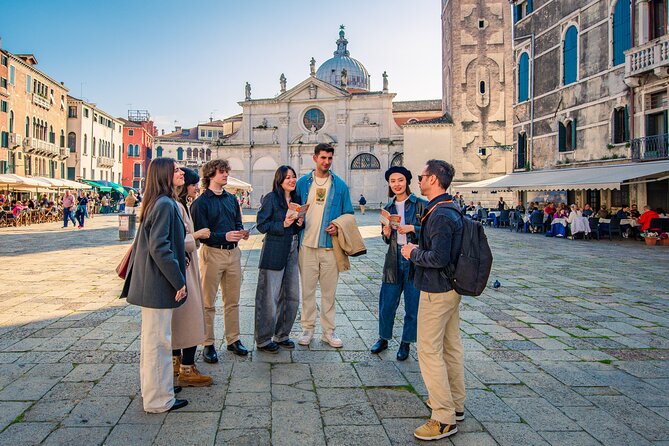
The Torre dell’Orologio sits on the north side of St. Mark’s Square, at the entrance to the Merceria. This early Renaissance clock tower marks the beginning of one of Venice’s principal shopping and walking routes.
The stop is brief, about ten minutes. That is appropriate for an exterior look, since the tower’s importance is best understood as part of the square’s design. It forms a gateway between the monumental Piazza and the narrower commercial streets beyond.
The Bridge of Sighs receives more time, about 30 minutes. Built in 1602 from white Istrian stone, the covered bridge connects Doge’s Palace with the New Prisons. It contains two separate corridors divided by a wall, allowing people to move in both directions without crossing paths.
The familiar name encourages a romantic story, but the bridge had a practical and grim purpose. Prisoners crossed from the palace courts to the prison complex. The covered design kept the route enclosed, and the small windows offered limited views of Venice. The bridge is easy to photograph from outside, but the guide’s explanation gives the structure more weight than a quick picture does.
More Gondola Rides in Venice:
- Venice: Grand Canal Gondola Ride with App Commentary
★ 4.1 · 23,020 reviews - Venice: Grand Canal Gondola Experience with Live Commentary™
★ 4.2 · 16,504 reviews - Venice: Shared Gondola Ride Across the Grand Canal
★ 3.9 · 6,645 reviews - Grand Canal Gondola Experience with Live Commentary™
★ 4.0 · 4,223 reviews
Doge’s Palace reveals how Venice was governed
Doge’s Palace is one of the essential sights on the route. Its Venetian Gothic exterior faces the lagoon and the square, while its former function was far more serious than its ornate appearance suggests. This was the residence of the doge, the highest authority in the old Venetian Republic.
The tour allows roughly 30 minutes here, but admission is not included. Expect to see the building from outside unless you arrange a separate ticket. That is an important limitation because the interior contains the rooms, artwork, and prison connections that make the palace especially rewarding.
Even from the outside, the palace helps explain Venice. Government, ceremony, law, and trade all met around St. Mark’s Square. A good guide can connect the palace to the Bridge of Sighs and show how official power moved from grand halls to the prison buildings.
If you already plan to visit Doge’s Palace separately, this tour can serve as an introduction. If you hoped to tour the interior during the three-hour walk, the listed price does not cover that.
Rialto Bridge and Venice’s working side
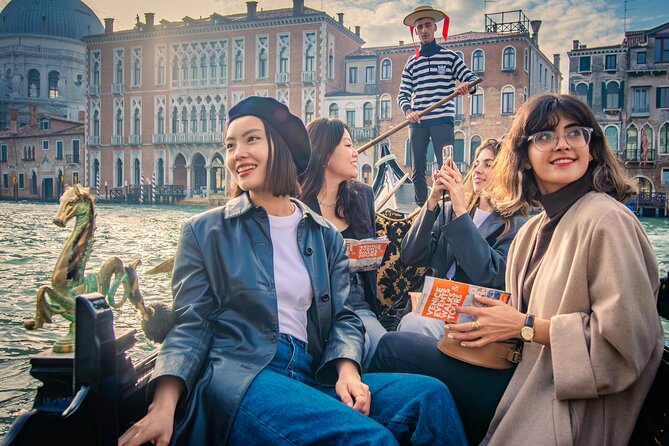
The Rialto Bridge is the oldest of the four bridges crossing the Grand Canal. It connects the San Marco and San Polo districts and has been rebuilt more than once. Earlier versions used boats and then wood, while the stone bridge you see today dates to 1591.
This is one of the tour’s strongest stops because it combines a famous view with a practical lesson in how Venice developed. The bridge is not merely a scenic crossing. It links important parts of the city and has long carried people through one of the busiest areas along the canal.
The stop lasts about 30 minutes. You will have time to look along the Grand Canal and understand why this crossing mattered. The bridge can be crowded, and the walking surface is uneven, so stay close enough to hear the guide. If the group is moving quickly, ask for a short pause before the explanation begins.
The route’s mention of Venice’s roughly 354 bridges also helps put the Rialto in context. The city’s bridges are basic pieces of transportation, but they also give Venice its distinctive rhythm: up, over, down, and into another narrow street.
La Fenice adds music to the route
Teatro La Fenice is the opera house on this walking circuit. Its name means the phoenix, a fitting title for a theater with a long and difficult past. It became one of Italy’s major opera venues, especially during the 19th century, when works by Rossini, Bellini, Donizetti, and Verdi were performed there.
The stop is short, about ten minutes, and admission is not included. You should expect an exterior introduction unless you make separate arrangements. Even so, it breaks up the parade of churches, palaces, and bridges with a look at Venice’s performing arts.
This stop is most useful if you enjoy opera or theater. The guide can explain why La Fenice matters within Italian cultural life, rather than leaving you with another ornate façade and no sense of purpose.
The gondola ride is the tour’s most memorable change of pace
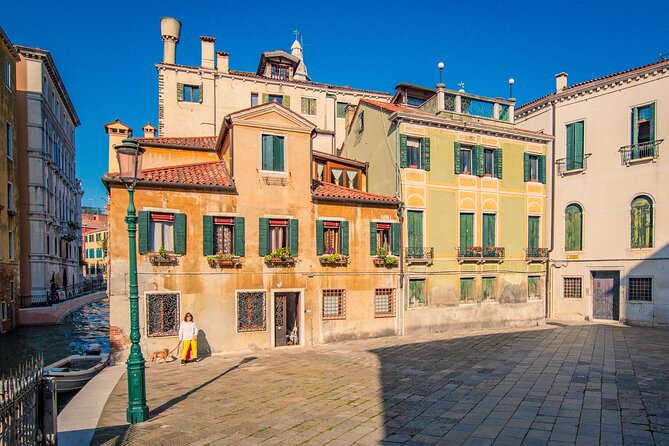
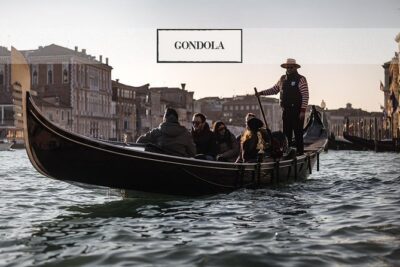
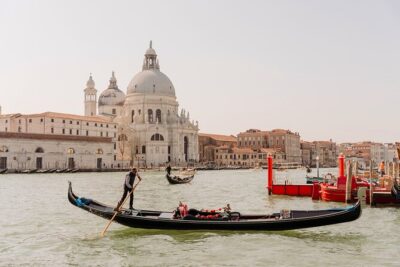
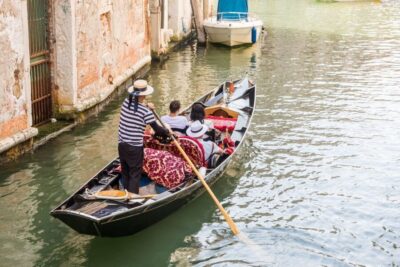
After walking through Venice’s streets, the gondola ride gives you a different view of the city. The boat moves at street level from the water, with buildings rising directly from the canals. You see how the city’s architecture relates to its waterways rather than simply passing between buildings on foot.
The ride is included, which is a real advantage. Arranging a gondola independently can be confusing, especially if you are trying to fit it around a short visit. Here, the guide is expected to get you to the correct boarding point, and one highly praised guide, Julian, was described as returning to collect the group and finish the walking tour afterward.
Do not assume that your gondolier will sing. One booking included a gondola without singing, and interference from the microphone made the commentary hard to hear. The ride can still be worthwhile without music, but you should treat singing as an extra, not a promise.
There is also a serious practical warning: one booking reported that the gondola was unavailable. If the ride is the main reason you are paying for this experience, confirm its status on the day and ask what happens if water conditions or operations prevent it.
Guide quality can change the whole experience
The best part of a walking tour is not the list of monuments. It is the person who turns streets and buildings into a connected story. Julian received especially strong praise for being engaged, taking requests from the group, helping with the gondola, and assisting with onward transport to a water taxi and the people mover.
Elisabeth was also singled out for explaining Venice and the surrounding area in a clear way. Guides are not guaranteed by name, but these examples show what to hope for: someone who keeps the group together, explains rather than recites, and notices when people need practical help.
The weak point is pace. Some sessions have moved too quickly, with almost no pauses between stops. One booking spent much of the first hour walking from the meeting point toward the gondola, making it hard to hear over the crowds. You should be ready to speak up if the guide is rushing or if the group has fallen behind.
The meeting point at Santa Lucia is easy to understand, but the company should provide precise instructions before the tour. One person missed the experience after not receiving clear meeting information and being unable to reach the guide. Read the confirmation carefully and make sure you know the exact meeting spot, not just the station name.
Is $185.38 a fair price?
At $185.38 per person, this is not a budget walk. You are paying for a guide, a small group, and a traditional gondola ride in one package. You are not paying for food, drinks, personal purchases, tips, or admission to the Campanile, Doge’s Palace, Clock Tower, or La Fenice.
I see reasonable value here if you have only one day in Venice and want the major sights organized for you. The gondola is the main financial advantage, since it is included rather than added as a separate activity. The guide also saves time when you are still learning the city’s confusing layout.
The value drops if you already know Venice well, dislike fast group walks, or want long interior visits. You could spend three hours exploring at your own pace and return to a favorite monument later. This tour is best for a first visit, especially if you want a quick orientation and do not want to arrange the gondola yourself.
The rating of 3.3 from 13 reviews suggests an uneven experience. The difference seems to come less from the route itself and more from the guide, communication, pace, and gondola arrangements. That is why the meeting details and exact group size matter so much.
Who should book this experience?
I would choose this tour if you are visiting Venice for the first time, arriving at Santa Lucia station, and want the famous sights tied together with a gondola ride. It suits people who enjoy a guide’s stories but do not need extensive time inside every museum.
It also works for families and mixed-age groups who want an easy introduction, provided everyone can manage bridges and several hours of walking. Most people can participate, but comfortable shoes are essential.
I would hesitate if you need frequent rest breaks, prefer a slow pace, or are mainly interested in the interiors of St. Mark’s Basilica and Doge’s Palace. Those admission tickets are not included, and the walking schedule may leave little time to linger.
Free cancellation is available up to 24 hours before the start time. Day visitors should also check the Venice access fee rules, since some dates require a €5 fee for people staying outside the city, with exemptions in some cases.
Should you book the Venice walking tour and gondola ride?
Book it if you want a single, structured introduction to Venice that combines the Grand Canal, St. Mark’s Square, Rialto Bridge, Doge’s Palace, and a gondola. The route is broad, the meeting point is convenient for train arrivals, and guides such as Julian or Elisabeth can make the experience much more personal.
Book with caution if the gondola is non-negotiable. Confirm the ride, meeting instructions, group size, and guide details before you go. If the company can provide a clear plan and you are comfortable with a brisk walk, this is a practical first taste of Venice. If you want quiet observation and long museum visits, design your own route instead.
FAQ
How long does the Venice walking tour and gondola ride last?
The experience lasts approximately three hours.
Where does the tour start and finish?
It starts at Stazione di Venezia Santa Lucia in Venice. The activity ends back at the meeting point.
Is the gondola ride included?
Yes. A traditional gondola ride is included in the tour.
Which major sights are covered?
The route includes the Grand Canal, St. Mark’s Square, the Campanile di San Marco, the Clock Tower, the Bridge of Sighs, Rialto Bridge, Doge’s Palace, and Teatro La Fenice.
Are admission tickets to the monuments included?
No. Admission to the Campanile, Clock Tower, Doge’s Palace, and La Fenice is not included. The listed stops may be viewed from outside.
What is the maximum group size?
The tour details state both a maximum of 14 people and a maximum of 8 travelers. Check your booking confirmation for the group size that applies to your date.
Can I cancel for a full refund?
Yes. You can cancel at least 24 hours before the experience start time for a full refund. Changes or cancellations made less than 24 hours before the start time are not accepted for a refund.
Just added around Venice
- Venice: Vip Semi-Private Walking Tour with Gondola Ride★ 4.5 · 17 reviews
- Venice: Walking Tour & Gondola Ride★ 4.4 · 22 reviews
- Venice: Gondola Ride and Skip the Line Doge’s Palace Tour★ 4.1 · 36 reviews
- LAND & GONDOLA PHOTOSHOOTING★ 4.8 · 8 reviews
- Venice: Romantic Palace Dinner and Private Gondola Ride★ 4.7 · 6 reviews
- Venice: St. Mark’s Basilica Guided Tour and Gondola Ride★ 4.5 · 2 reviews
- Venice: Private Tour with Doge’s Palace, St. Mark’s, Gondola★ 5.0 · 7 reviews
- Venice: Private Photoshoot In Gondola★ 5.0 · 13 reviews
Venice Gondola Rides, compared.
Grand Canal Gondola Ride with App Commentary
Read our review →
Grand Canal Gondola Experience with Live Commentary™
Read our review →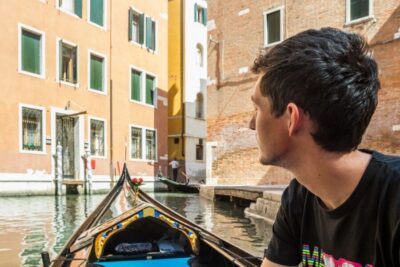
Grand Canal Gondola Experience with Live Commentary™
Read our review →
Venice In a Day: St Mark’s, Doges Palace Gondola Ride & City Tour
Read our review →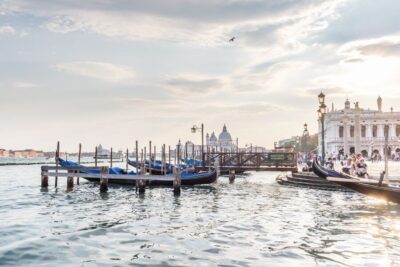
Browse the lists this tour appears in